A well-characterized peptide can still give you bad data if it degraded between the loading dock and the bench. Storage and handling are where an expensive reference material is either protected or quietly ruined. Here are the fundamentals for a research setting.
Dry vs. dissolved: two very different lifetimes
The single most important distinction: lyophilized powder is stable; solution is not. Dry peptide stored properly is good for on the order of years. The same peptide in solution may be good for days to weeks depending on sequence, pH, and temperature. Reconstitute only what you need, when you need it.
Storing the lyophilized vial
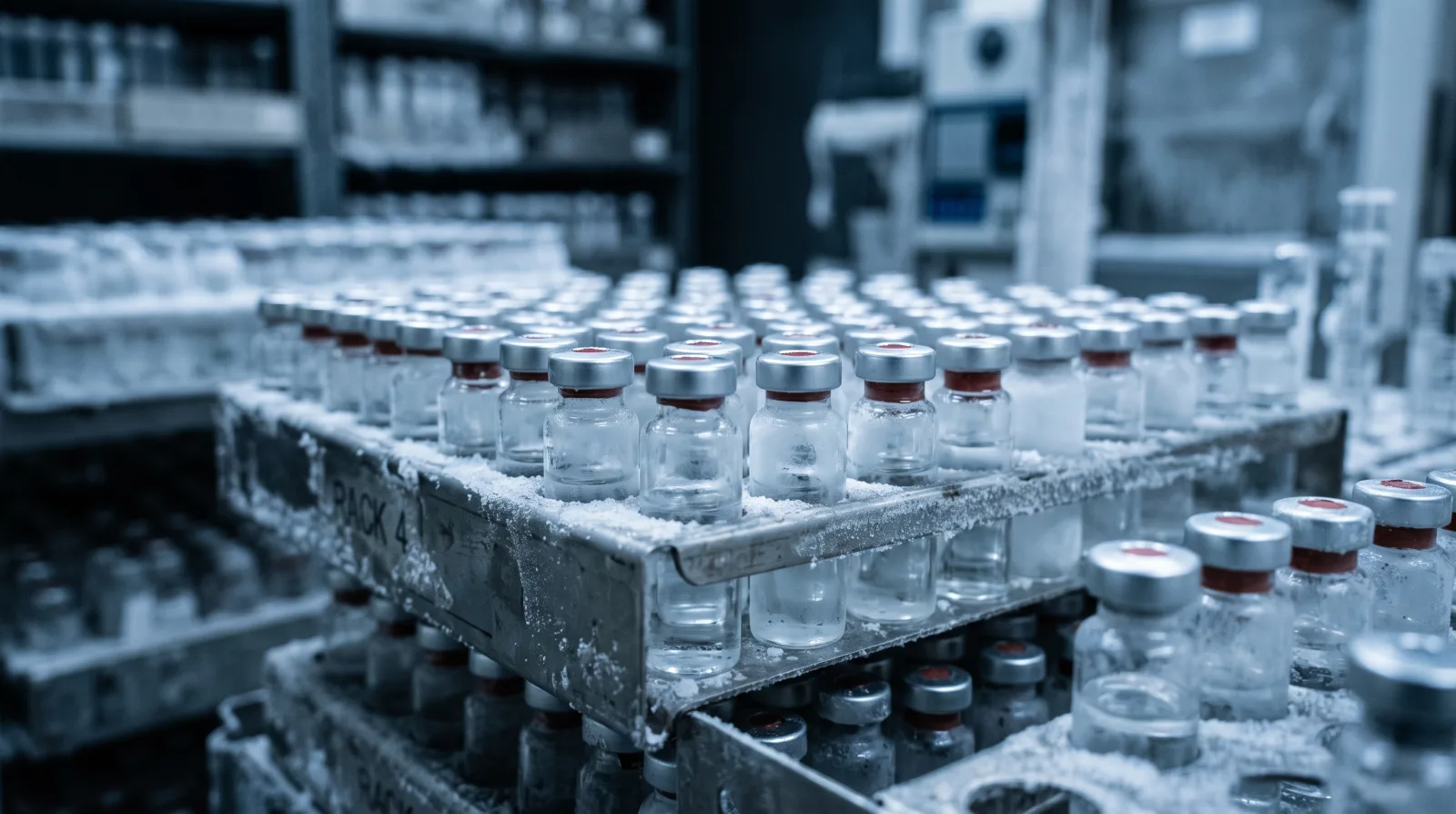
- Temperature: −20 °C is the standard for long-term storage; some labs use −80 °C for extended archival. Brief periods at 2–8 °C during shipping are fine (that's why vials ship with a cold pack).
- Light: store protected from light. Several residues (tryptophan, methionine, cysteine) are photo- and oxidation-sensitive.
- Moisture: keep vials sealed until use. Lyophilized cakes are hygroscopic; let a cold vial reach room temperature before opening so condensation doesn't form inside.
Handling on the bench
- Bring vials to room temperature before opening to avoid drawing moisture into the cake.
- Reconstitute under aseptic technique; add diluent slowly and swirl, never shake.
- Label reconstituted vials with concentration and date — solution age is now a variable.
Freeze–thaw: the silent degrader
Every freeze–thaw cycle stresses a peptide in solution. The practical fix is single-use aliquots: split a reconstituted stock into small volumes, freeze them, and thaw each exactly once. This trades a little upfront pipetting for consistent material across a study, and it's the difference between reproducible and drifting results in a long experiment.
Cold-chain on arrival
When an order arrives:
- Confirm the cold pack is still cool and vials are intact.
- Move lyophilized vials to −20 °C promptly.
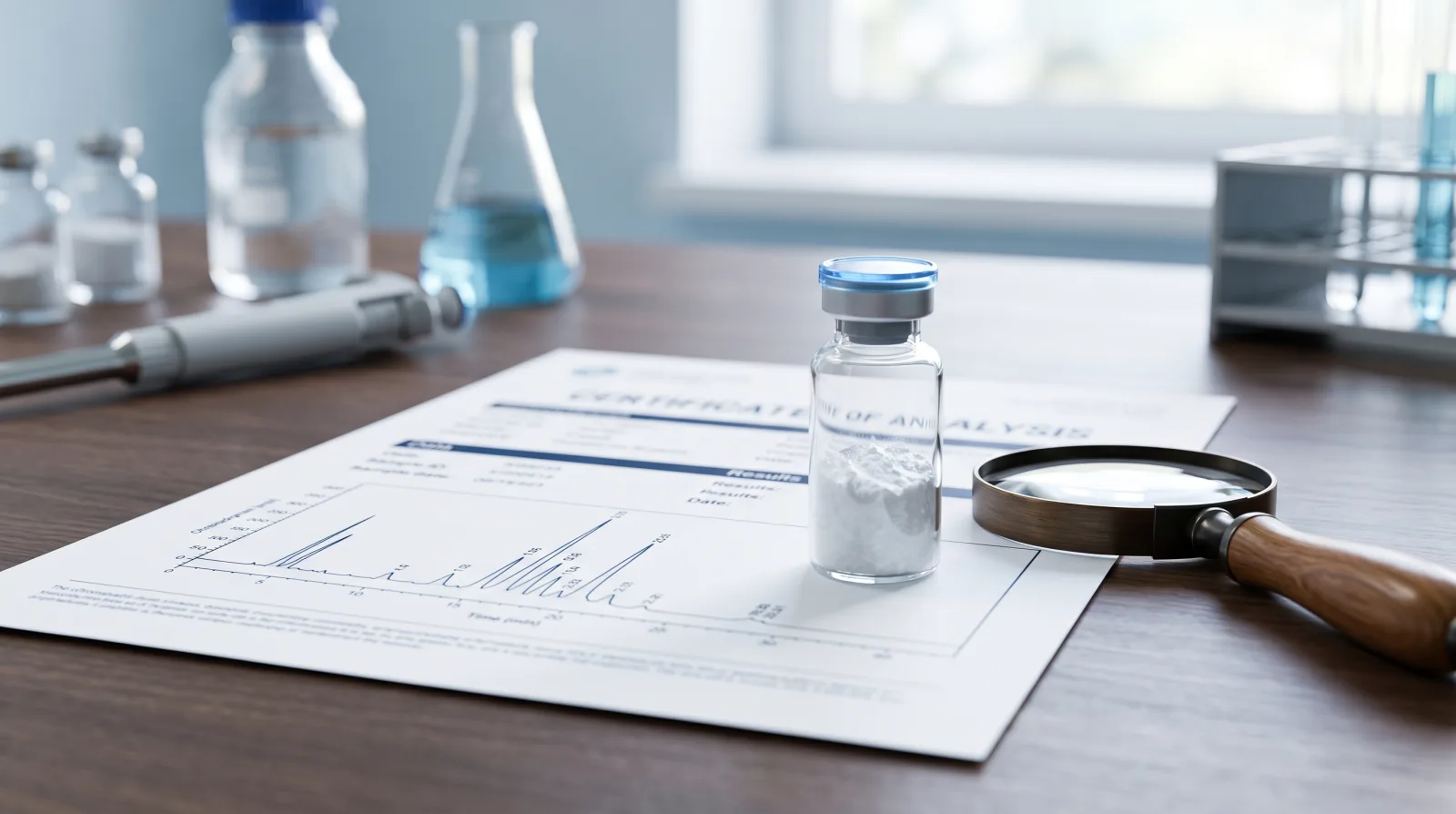
- Note the lot number and file the COA — traceability starts at receipt.
If packaging failed — warm pack, cracked vial, compromised seal — document it and contact the supplier. A reputable research vendor will reship a genuinely compromised order.
The short version
Keep it dry, cold, and dark; reconstitute fresh; aliquot to avoid freeze–thaw; and treat solution age as an experimental variable. None of it is difficult, but all of it is the difference between a reference material that behaves and one that mysteriously doesn't.
For laboratory research use only. Products discussed are reference materials, not drugs or supplements, and are not for human or veterinary use, diagnosis, treatment, or consumption. This article is educational and does not describe or endorse any in-vivo use.